The 7 financial KPIs you need to know as a professional services business leader
11 min read
8 min read

A thin profit after a busy year is rarely the market's fault. It usually comes down to three leaks, and you can find all of them in a week.
If you are cutting costs this year, the first question is whether you are cutting the right thing. A salary is easy to find on the P&L. The 120 hours that went into a project sold for 400, or the client whose account quietly ran at zero margin, never appear there. In a project business that is where the profit went, and project profitability means knowing it before you decide what goes.
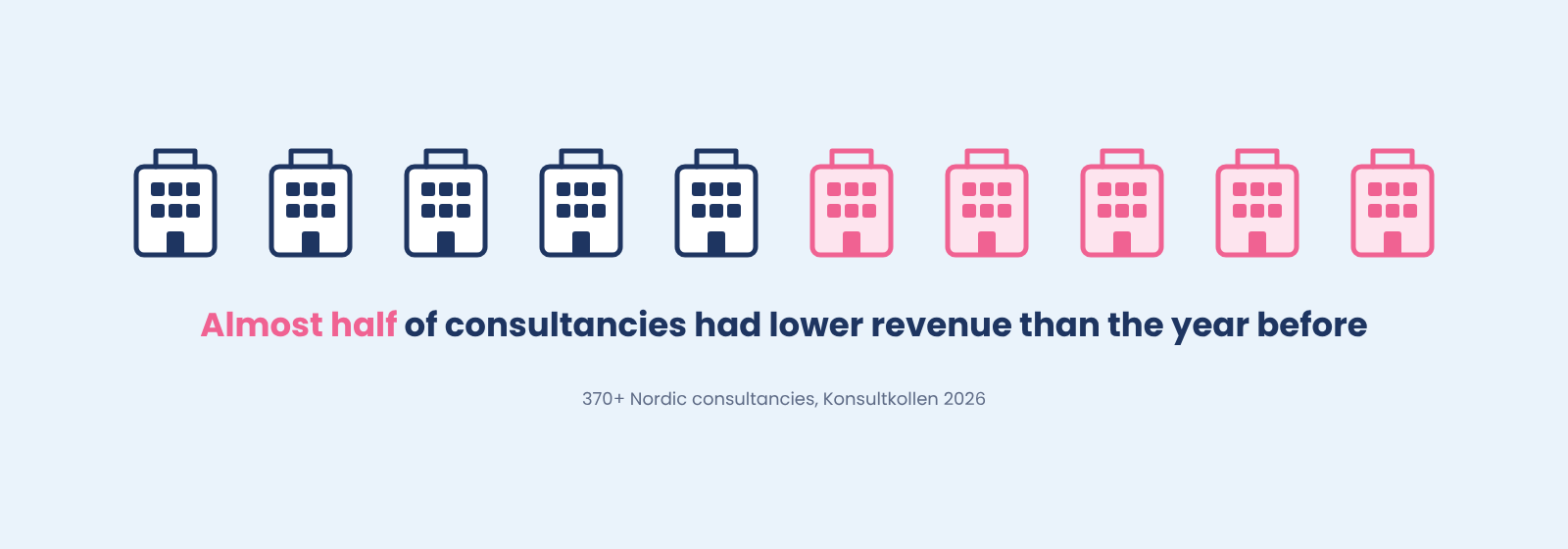
When work is coming in, nobody looks too hard at a project that ran 15% over. The next one covers it, and the overrun becomes a story about a difficult client. Take the growth away and the same overrun lands straight on the profit line. That is where a lot of consultancies are: the biggest Nordic study of the sector, covering more than 370 firms, found that almost half had less revenue in 2025 than the year before, and one in five lost money. The firms that still grew were nearly all profitable too, and the difference was rarely effort. They knew which projects paid and which did not.
Architects have had it longer than most, with billings in the largest market tracked falling for over three years, and engineering practices with full order books still run on margins of around 7%, which one bad project can wipe out. The benchmark SPI Research runs across 500+ project businesses shows how common the miss is: only 17.2% hit their full margin target in 2025. Everyone else set a margin, missed it, and found out where it went after the books were closed.
Finding out after the books are closed is the real problem, because by then the project is finished and the client has paid, and there is nothing left to correct. Over 25 years with project businesses, TimeLog has watched the margin disappear in the same three places almost every time: hours that were worked and never invoiced, projects that used more hours than they were sold for, and clients that cost more to serve than they pay. It holds whether the company is 20 people or 70, an IT consultancy or an architecture practice.
None of the three shows up as a line in the accounts. An overrun arrives as a slightly lower margin four months later, and unbilled hours just look like a normal month. Even a client who costs more than they pay still looks like your biggest account from the revenue line. That is why they survive year after year, and why the fix starts with looking in the right place rather than cutting in the wrong one.
Every hour your people spend on client work that never reaches an invoice is revenue you earned and gave away. The industry calls it revenue leakage, and businesses between 10 and 100 people lose around 5% of revenue to work that was done and never invoiced. The benchmark adds the uncomfortable part: most organizations are not aware of it, because an hour that was never written down never shows up as missing.
It rarely comes from big mistakes. Someone takes a call with a client, fixes a small thing, answers a long email thread, and never registers it. Each one is ten minutes, and across 50 people and a year it is a salary. If billable hours per person come from memory at month end rather than from the day the work happened, assume you are at the industry average. On €7 million in revenue that is €350,000 a year walking out the door with nobody noticing.
This is where daily time tracking earns its keep: when registering an hour takes less effort than remembering it, the unbilled hours surface on their own. The revenue leakage calculator gives you a first estimate of your own number in two minutes.
An overrun is a project that used more hours than the price was based on. On time and materials you invoice the extra and the client notices. On a fixed price the extra comes straight out of your margin, and nobody notices until much later.
A fixed-price project estimated at 400 hours that took 520 does not announce itself. It arrives as a slightly thinner month, four months later, when the final invoice was sent long ago and nobody connects the two. The benchmark names the usual suspects: the estimate was optimistic to win the work, and the scope grew without anyone raising it with the client.
At the point where half the planned hours are used, the project should be half done. If budget consumed is running ten points ahead of work completed, the project margin you quoted is already gone, and the only open question is how much more follows it. A project budget that shows planned against actual hours while the project is running turns that into a weekly glance instead of a quarterly surprise, and it gives the project lead a number to take into the scope conversation.
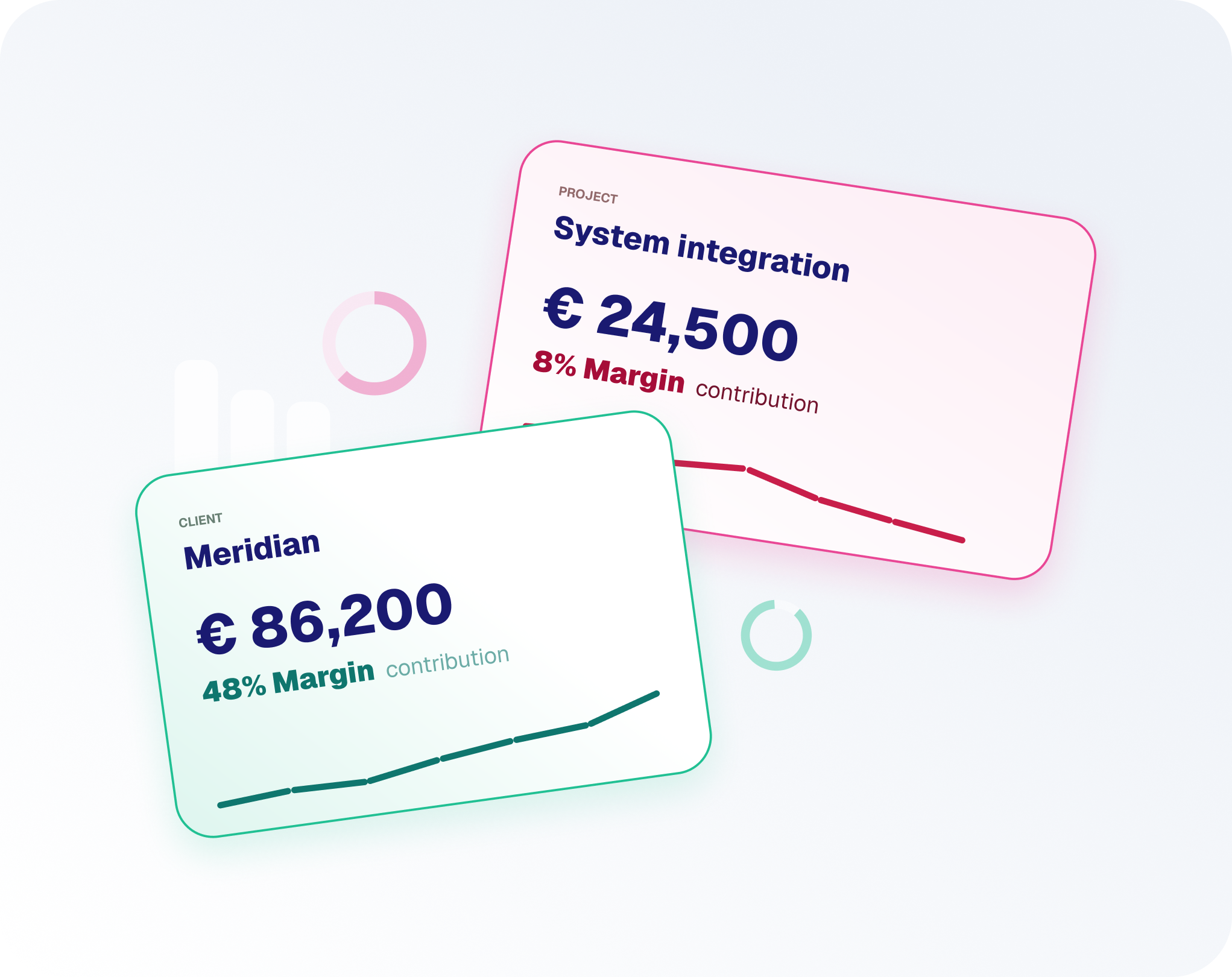
A client's real margin is what is left after every hour spent on the account, including the meetings, the quick favors and the hours that never made it onto an invoice. Measured that way, the account with the most revenue often also carries the most unpaid meetings and the longest payment terms, and when every hour over a year is put against each client, the margin rate per client rarely matches the revenue ranking. One or two accounts usually sit close to zero.
If you cannot rank clients by margin, you are pricing renewals on revenue, and revenue is the number the client already likes. A client-level view of margin is the difference between a renegotiation you walk into with numbers and one you walk into with a feeling.
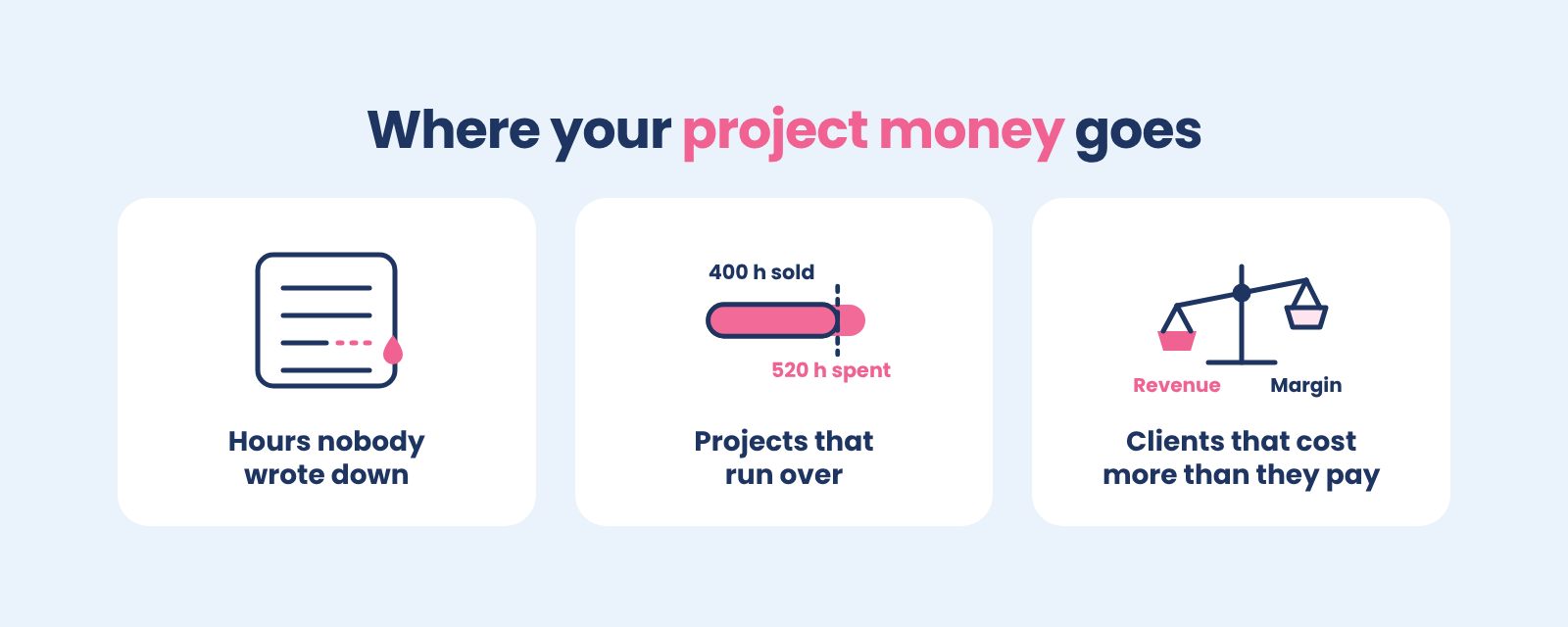
The reason to go looking is that the three leaks together are usually larger than the profit the business made, which is why a tight year feels so hard to explain. Here is what it looks like at the size most of our customers are. The figures are illustrative, and the pattern is what we see in most businesses this size the first time hours are put against projects and clients.
An IT consultancy of 55 people, with around €7 million in revenue, closes the year with a profit margin of 7%, roughly €490,000. The owner calls it tight but fine. Then the hours go against the projects. Unregistered client calls and quick fixes come to €280,000 that was never invoiced. Two fixed-price projects ran 30% over and cost €190,000 of the margin that was quoted. The third-largest client, once account management time is counted, earned almost nothing. Together the three leaks are around €500,000, which is more than the whole year's profit. The owner could have found all of it in a week with the hours already in people's calendars.
At 25 people and €3 million in revenue the same three leaks come to around €200,000, and they take the same share of the profit.
These need nothing more than this year's invoices and a spreadsheet, and they show you which of the three leaks is yours while there is still time to do something about it.
Businesses closer to 75 people often have the hours registered and still cannot see the leak, because the numbers are only looked at per project. The next step is to split margin by client and by project type, so a fixed-price development project and a retainer stop being averaged into one number that looks acceptable.
The second step is a billable share target per role, so a consultant expected at 75% and a team lead expected at 50% are each measured against their own number instead of a company average that flatters nobody. Once both views exist, the last actual becomes the basis for the next quote, and estimates stop being optimistic by default.
Whatever you decide to change this year, decide it with the three numbers in front of you. The businesses that come through a flat year with their margin intact are the ones that can see, each week, which projects and clients are paying for the others, and they correct in small steps before the year-end accounts make the decision for them.
That has nothing to do with having a finance department. It comes from putting every hour against a project and a client from the day the work happens, and from looking at the result on a Monday rather than in March. Every number in this article comes from exactly that, and project margins and financial visibility is where it lives in practice.
What this looks like in TimeLog